STEM matters when students can use what they learn to solve problems beyond the classroom. Building a K-12 STEM pathway means connecting age-appropriate concepts to practical projects, then helping students apply growing skills to real-world challenges and explore how those skills relate to future careers.
Students need more than isolated activities. They need chances to ask questions, test ideas, collaborate, explain their reasoning, and improve their designs. A clear progression helps early curiosity grow into confident problem-solving and a stronger understanding of how science, technology, engineering, and mathematics shape everyday life.
This article explains how to connect learning across elementary, middle, and high school; design projects that build transferable skills; and support teachers with a coherent curriculum and practical resources. It also shows how high school STEM can introduce careers in fields such as engineering, health sciences, agriculture, and information technology.
Key Takeaways
- Connect learning across grade levels so students move from early exploration to more complex design and technology challenges.
- Use practical projects to help students recognize how STEM concepts apply to everyday problems and future study or work.
- Support teachers with coherent curriculum, useful materials, training, and planning that makes hands-on learning sustainable.
- Build transferable skills by giving students chances to investigate, collaborate, explain their thinking, and refine their work.
- Link high school coursework with career exploration so students can see how their interests connect to STEM fields.
Starting STEM learning early and continuing across grade levels
A K-12 STEM pathway connects science, technology, engineering, and mathematics learning from kindergarten through high school. For schools, building a K-12 STEM pathway means developing skills progressively through practical investigations, design challenges, and reflection.
Learning Across Grade Levels
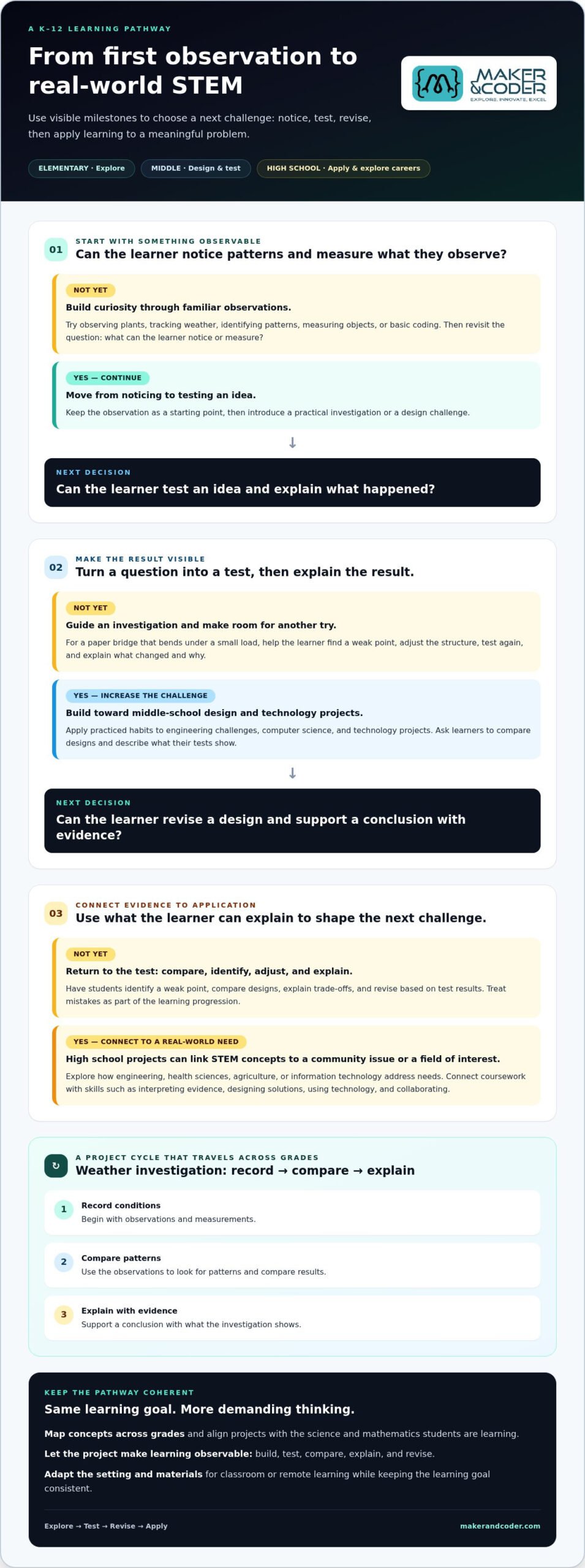
Early STEM learning builds curiosity through familiar observations. In later grades, students test ideas and design solutions, drawing on skills they have already practiced as each challenge becomes more demanding.
Key stages move from elementary exploration to middle school design and technology challenges, then to high school applications and career exploration. Milestones are visible in what students can do: measure and notice patterns, explain a test, revise a design, and support a conclusion with evidence.
Elementary students might observe plants, track weather, identify patterns, measure objects, or try basic coding. In middle school, they can apply those habits to engineering challenges, computer science, and technology projects. By high school, students can connect these concepts to a community issue or a field of interest.
Mistakes are part of the progression. If a paper bridge bends under a small load, students can find the weak point, adjust the structure, and test again. Teacher feedback should help them explain what changed and why, rather than treating the first attempt as the final result.
Curriculum Alignment and Project-Based Learning
Curriculum alignment connects project goals to grade-level learning expectations. Project-based learning gives students a practical context for applying those concepts. Together, they help teachers build continuity without repeating the same task at every grade.
Map concepts across grades, then choose projects that make learning observable. A weather investigation, for example, can progress from recording conditions to comparing patterns and explaining how evidence supports a conclusion. Align each stage with the science and mathematics students are learning.
Effective alignment makes the progression clear to students, too. A design project might ask younger learners to build and describe a simple structure, then challenge older students to compare designs, explain trade-offs, and revise based on test results. Standards define the learning goals; the project gives students a reason to apply them.
Hands-On and Online STEM Learning
Effective instruction combines guided investigation, collaborative design challenges, and reflection. Hands-on engineering activities let students build, test, and improve a physical solution. Online and distance-learning resources can extend access to demonstrations, coding activities, and shared project documentation.
A classroom team could build a paper tower, test its stability, and record which design changes improve it. At home, students could document a simple coding task or compare observations from a plant-growing activity. In either setting, the learning cycle stays concrete: pose a question, try an idea, examine the result, and revise.
For distance learning, pair an online demonstration with a low-material design task, such as sketching a structure and explaining how it might withstand a push. Students can share diagrams or written explanations for feedback. Keep the learning goal consistent, while adapting materials and collaboration to the classroom or remote setting.
How can your student use STEM in the real world?
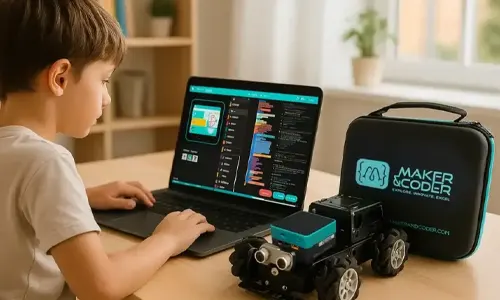
Students use STEM when classroom ideas help them understand a system, solve a problem, or make a decision. A middle school student studying science and computer science, for example, can program a small robot to follow a route, then explain how its sensors and instructions shape its movement. That turns abstract learning into something observable.
For post-secondary preparation, connect projects with skills students may use in further study and work: interpreting evidence, designing solutions, using technology, and collaborating. The Gaskins Foundation describes 90% of all new jobs as requiring some background in STEM. Students can explore that connection by investigating how engineering, health sciences, agriculture, or information technology address needs in their communities.
Eligibility depends on the learning setting. Online public schools serve students in grades K-12, while STEM-specific curriculum is available in grades 6-12; eligibility requirements vary by state and school, and students must meet their school’s state residency requirements.
Make STEM part of regular instruction, not an activity reserved for students who already have equipment or experience. Offer projects during class, provide accessible materials, and assign roles for testing, recording, coding, and presenting. Students without a robotics kit can still plan a route, write step-by-step instructions, or test a paper prototype with classmates.
Funding and Emerging Technology
In the United States, the National Science Foundation’s STEM K-12 funding opportunity is identified as NSF 25-545. It supports research and development to advance STEM teaching and learning, including work that leverages AI and emerging technologies; proposals must follow the opportunity requirements and the Proposal & Award Policies & Procedures Guide.
Emerging technology is most useful when it serves a learning goal. For example, students can compare an AI-generated prediction with observed results, identify where the prediction differs, and explain what evidence supports their conclusion. The NSF STEM K-12 program supports research across formal and informal learning settings, making technology’s educational purpose central rather than treating novelty as the outcome.
Educational Robotics in Practice
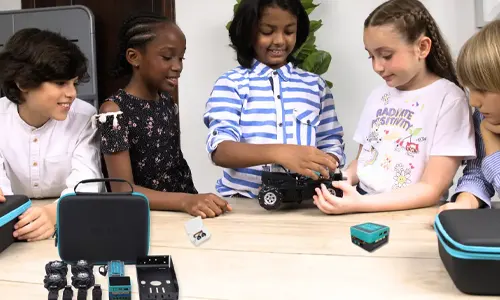
Educational robotics brings coding, engineering, and collaboration together in a task students can observe and revise. Teams might program a robot to carry a lightweight object along a marked path, then adjust its instructions if it turns too early or misses a landmark.
To deepen the exercise, ask students to record the change they made, explain why it helped, and identify another test. This connects computer science with evidence-based thinking and gives learners practice communicating design choices. A classroom robotics learning plan can help educators connect such activities with their STEM goals.
Teacher planning, time, materials, and support
A sustainable STEM program depends on coordinated lesson planning, usable materials, and ongoing teacher support. These choices determine how well engineering, robotics, and mathematics become engaging parts of classroom learning.
Planning, Time, and Classroom Resources
Good planning connects learning goals, classroom time, materials, and assessment in lessons teachers can deliver. Robotics requires more than equipment: students need a clear challenge, time to test designs, and a way to explain their results.
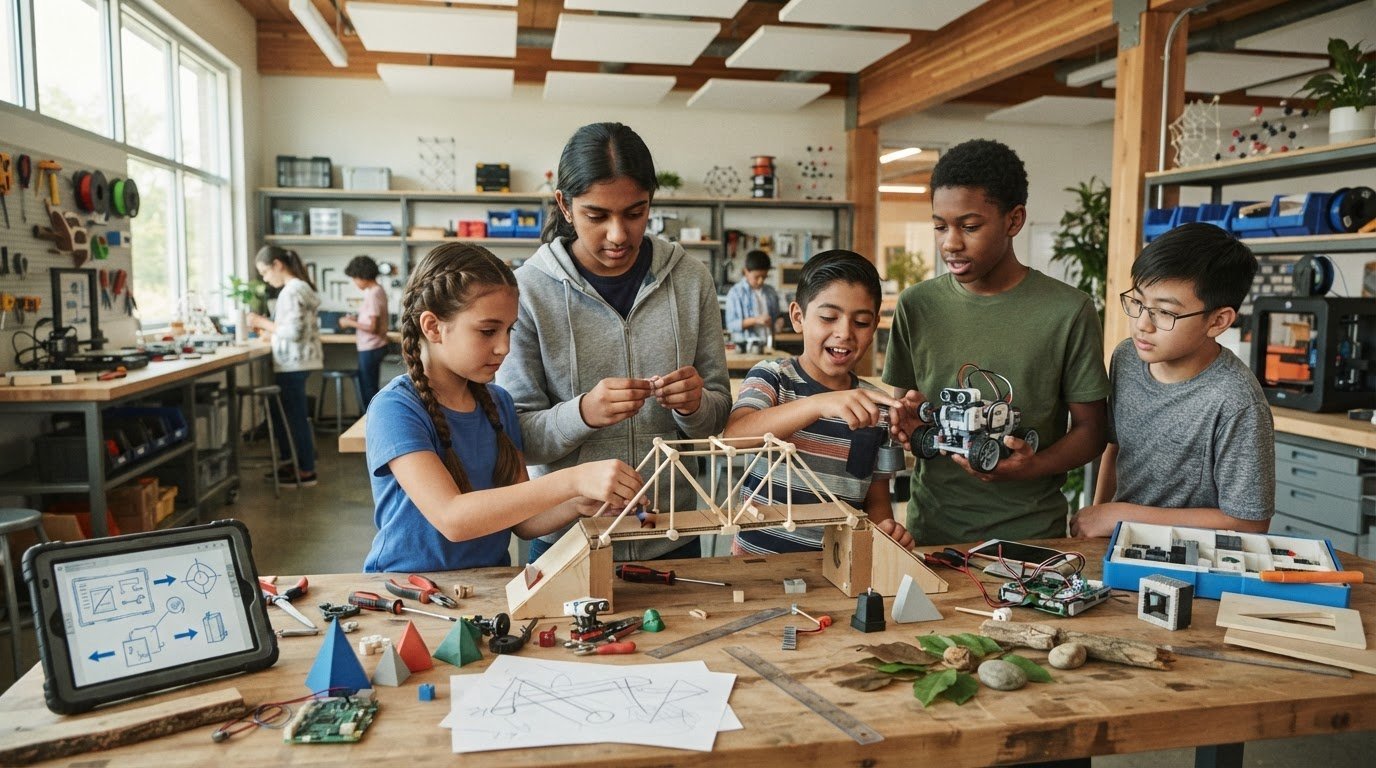
Start with the curriculum goal, then decide what students will build or investigate. A bridge-design task, for example, can connect engineering with measurement and mathematics. Before class, prepare reusable materials, instructions, a testing space, and a reflection prompt. This makes the activity easier to manage and keeps students focused on the concept instead of waiting for supplies.
Make the schedule and resource plan visible. A teacher might divide a lesson into an introduction, a build period, and time to test and reflect. For robotics, allow time for setup, troubleshooting, and returning equipment. Plan for equipment refreshes and regular lesson updates so resources and activities remain useful.
Teacher Training and Professional Development
Teacher training develops the subject knowledge and facilitation skills needed to guide STEM learning. It matters because teachers must connect a hands-on task to its underlying concepts, not simply distribute materials and supervise.
Professional development can model the process students will use. Teachers can build a simple mechanism, test it, diagnose a failure, and revise it before adapting the task for class. This practice helps educators anticipate questions about design choices, coding steps, and measurement. It also gives them firsthand experience of how feedback can move a project forward.
Ongoing support should connect training to classroom practice. Teacher teams can review a lesson, compare student work, and adapt instructions for different grade levels. Preparation should also cover engineering concepts such as constraints, testing, and iteration. Maker & Coder’s Teacher Training Programs help educators turn those concepts into teachable activities.
Costs and Implementation Barriers
The cost of building and maintaining a STEM pathway depends on equipment, consumable materials, teacher planning time, training, and curriculum updates. Make a resource list, note what needs replacing and how often, and match purchases to specific learning goals.
A robotics program may need controllers and reusable components, while a design challenge may use cardboard, paper, or other classroom materials. Include storage, damaged parts, lesson revisions, and teacher preparation in maintenance plans. A staged approach lets schools begin with a focused project and expand resources as the curriculum develops.
Common barriers include limited planning time, uneven access to materials, and insufficient teacher preparation. Address them by sharing lesson plans across grade teams, offering alternative materials for the same task, and scheduling professional learning before introducing new equipment. If a project needs specialized tools, provide a parallel design or coding activity so students can engage with the same engineering idea.
Building transferable problem-solving and communication skills
STEM learning builds transferable skills when students investigate questions, collaborate, test solutions, and explain their evidence. In a classroom project, students might compare rainwater collector designs, measure how much water each captures, and explain which best meets the stated need. The process develops skills they can use beyond science lessons.
Start with a real community challenge, then integrate relevant subjects. Students exploring shade in their area could map sunny places, measure temperatures, and propose a planting plan. Science helps explain heat and plant growth; mathematics supports measurement and comparison; writing helps students present a clear proposal. The task gives problem-solving a purpose and connects learning across subjects.
Give students opportunities to improve their conclusions, not just finish a project. A team designing a simple water filter could record what passes through, compare materials, and explain why the results changed. Students can distinguish observation from assumption, identify limits in their test, and recommend another trial. This turns a classroom activity into evidence-based thinking.
Local industry, college, and community partnerships can supply authentic questions, feedback, and audiences for student work. Schools might invite a community organization to describe a practical challenge, then ask students to develop and present possible solutions. The Gaskins Foundation partnered with Cincinnati Public Schools to serve three STEM-focused elementary schools, serving 1,200 K-6 students.
Assign team roles to make collaboration visible. During a school garden design task, one student could measure the available space, another research plant needs, and another organize the presentation. Rotate roles across projects so students practice listening, explaining decisions, and combining ideas. A shared design log can record each choice, test result, and revision.
Communication connects classroom learning with college and careers. Ask students to present a claim, show the evidence behind it, and answer questions about their design. A team proposing a safer bike route, for example, can explain its map, describe its criteria, and note where more information would help. These habits support further study and collaborative work.
Assess students’ thinking as well as the finished product. A short reflection can ask what the team tested, what changed, and what evidence supports its final choice. When students transfer that reasoning from a classroom build to a community problem, they are using STEM to approach practical challenges.
High school STEM courses and career exploration
Evaluate a STEM pathway by defining measures such as engagement, achievement, and confidence. Review student work, course participation, and reflections together. A project rubric can show whether students apply concepts, explain decisions, and improve their designs.
High school courses should connect science, mathematics, computer science, and engineering through applied lessons. Students might use algebra to interpret sensor data, then program a device to respond to changing conditions. Connect each course objective to a project outcome so the purpose of the lesson is clear. Integrated coursework helps students see how disciplines combine to address practical challenges.
Career exploration works best when students encounter different fields and the questions those fields address. Connect biology lessons with health sciences, for example, or use environmental data to introduce agricultural systems. A computer science course might explore how information technology supports communication or organizes data. These examples let students investigate interests before choosing further study or training.
Coursework can extend beyond scheduled lessons through robotics, career and technical education, internships, research, and community-based projects. A student interested in engineering might document a design process in class, then explore how a local project applies similar principles. Teachers can help students connect that experience to course concepts and identify skills they want to develop further.
Reflection and varied experiences help students understand their interests. After a research project, ask which task held their attention: gathering evidence, analyzing results, building a model, or presenting findings. Teachers can use those responses to suggest relevant courses and future projects. The goal is informed exploration, not an early commitment to one career.
Evaluation should track progress over time, not rely on a single final product. Schools can compare project rubrics, student reflections, and course participation, then identify where lessons need adjustment. The Gaskins Foundation identifies 4th, 8th, and 11th grades as assessment checkpoints aligned with standardized testing. Those checkpoints can help schools examine how pathway learning develops across grade transitions.
Maker & Coder: MC 4.0 Kit
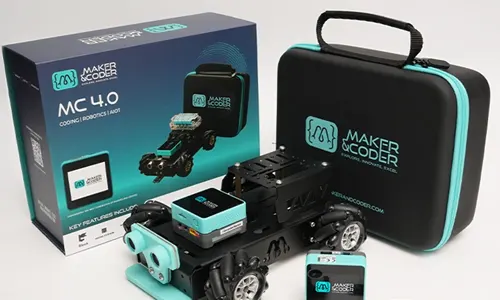
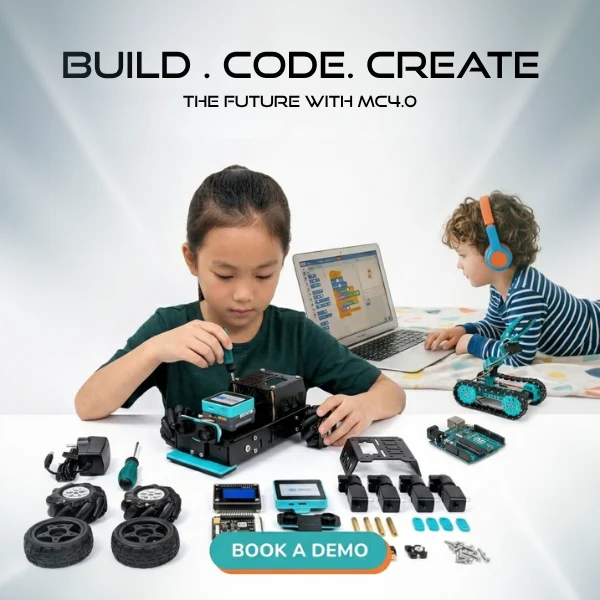
Maker & Coder’s MC 4.0 Kit offers a practical way to connect STEM lessons with hands-on technical learning. It can fit schools developing a structured pathway that combines classroom projects with progressive curriculum and teacher support.
The MC Curriculum (K-12) is designed to integrate with the hardware, while MC Blocks give students a modular way to engage with project work. Teacher Training Programs can support educators as they bring these learning experiences into the classroom. Together, these offerings connect curriculum planning, practical exploration, and teacher preparation without treating projects as isolated activities.
If your school is shaping its next STEM learning steps, contact Maker & Coder to discuss how these offerings may fit your educational goals.
Turn Your STEM Vision Into the Next Learning Experience
Choose one meaningful challenge as the next point of momentum. It could invite students to design, code, test, or explain a solution, while giving teachers a clear focus for planning. Building a K-12 STEM pathway becomes more manageable when each new learning experience has a purpose and a natural connection to what students will explore next.
Maker & Coder’s MC 4.0 Kit, MC Curriculum (K-12), and MC Blocks can support schools shaping that progression through practical learning resources. Consider which classroom goals matter most, where educators would value additional support, and how a new project could fit into existing learning. A thoughtful starting point can help turn a broad vision into a concrete plan for students and teachers.
Explore how these offerings might align with your STEM learning goals. Contact Maker & Coder to discuss your next step, and keep making room for students to imagine, build, and learn.
Maker & Coder for a K-12 STEM Pathway
Maker & Coder provides a STEM education ecosystem built around the MC 4.0 hardware platform and modular MC Blocks. For readers planning a K-12 STEM pathway, its MC Curriculum is designed to integrate with the hardware and provide a structured educational pathway.
Turn to Maker & Coder when you are ready to connect curriculum with hands-on technical learning. The lineup includes the MC4.0 Controller and Base, AIoT, and STEAM kits, which can be used alongside MC Blocks and the K-12 MC Curriculum.
Frequently Asked Questions
How is STEM integrated into the curriculum?
K-12 STEM is integrated by connecting science, technology, engineering, and mathematics concepts within learning experiences. A geometry lesson, for example, can ask students to model a small room, calculate dimensions, and use a digital design tool to test layouts. Teachers can coordinate subject goals so students apply related ideas across courses, then revisit them with greater complexity as they advance through school.
What facilities, equipment, and technology does a K-12 STEM pathway require?
Facilities and equipment should match the projects students will complete, not an idealized laboratory. A classroom can support basic design work with accessible workspace, measuring tools, reusable building materials, and secure storage. Coding or digital modeling also needs suitable computer access. For robotics projects, a school might use an MC 4.0 Kit and organize components so students can share, maintain, and return equipment between lessons.
What teacher qualifications and professional development are needed for K-12 STEM programs?
Teachers need relevant subject knowledge and the ability to guide investigation, design, and student discussion. Professional development can strengthen both through practice: work through a sample lesson, anticipate where students may struggle, and plan prompts that encourage reasoning. Maker & Coder’s Teacher Training Programs support classroom implementation. Teachers can rehearse a project, review its learning goals, and refine how they assess student explanations.