
When writing a grant for classroom technology, start with a specific student learning goal. Explain how the technology will support it and why the project aligns with the funder’s purpose. A strong proposal identifies the learning need, describes how students and teachers will use the tools, and shows how progress will be measured. Technology is a means, not the outcome.
It is tempting to begin with a list of equipment the classroom needs. Funders, however, want to see a clear connection between their mission and the difference a project can make for students. A focused plan can turn an idea for a STEM activity or digital learning resource into a compelling funding proposal.
This guide shows how to link classroom technology to student goals, align project outcomes with a grant’s priorities, and explore federal, state, local, nonprofit, and private funding opportunities. It also covers STEM funding, helping you shape a classroom idea into a proposal grounded in learning and purpose.
Key Takeaways
- Start with a student learning need, then show how technology will support a clear, measurable outcome.
- Use the SMART framework to shape project goals and connect the proposal to the funder’s mission.
- Explore funding options across federal, state, local, nonprofit, and private programs, including opportunities focused on STEM.
- Compare grant eligibility, priorities, timelines, and allowable expenses to identify programs that fit your project.
- Plan how students will use the technology and how you’ll track progress, report outcomes, and sustain learning beyond the grant.
Aligning classroom technology with student learning goals
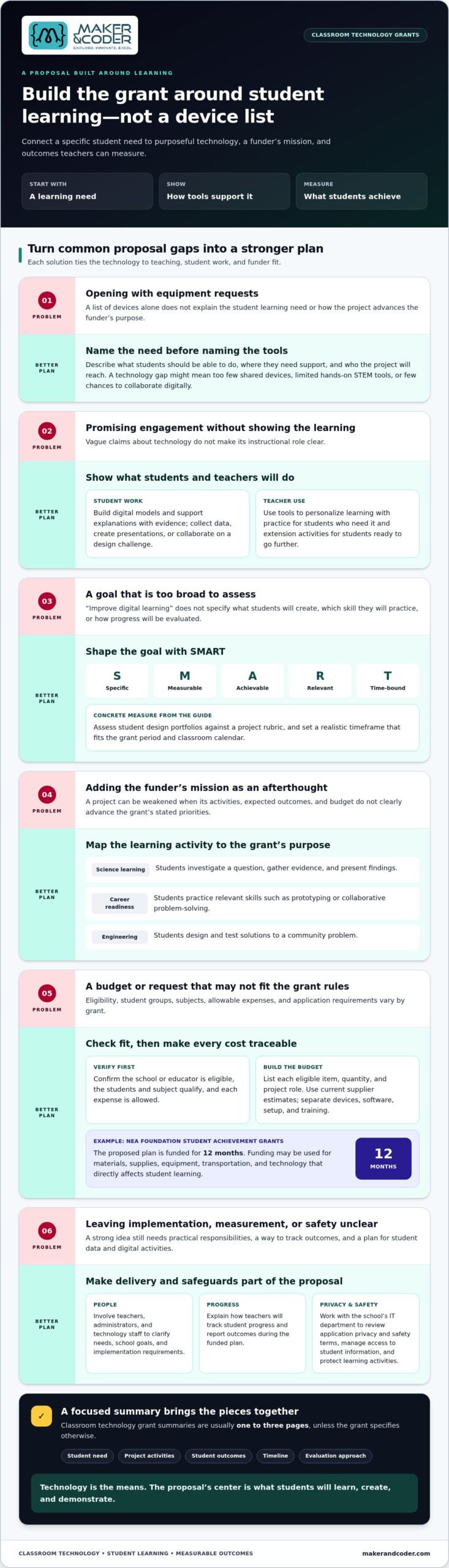
Start with the learning need, not a device list. Identify what students should be able to do, where they need support, and how digital tools can help. For instance, if students struggle to explain science concepts, teams could build digital models and present supporting evidence. The proposal can then connect equipment, classroom activities, and student learning to one clear purpose.
What are the eligibility requirements for classroom technology grants? Eligibility depends on each grant’s rules, which may specify who can apply, which student groups or subjects qualify, and which expenses are allowed. Before drafting, check that your school or educator status and project plan meet the criteria.
Make the student need specific. Describe the technology gap in practical terms: students may be sharing too few devices, lack tools for hands-on STEM activities, or have limited opportunities to collaborate digitally. Explain who the project will reach and how it addresses the gap. Classroom technology can give students without access to tools at home more opportunities to learn. Show how classroom access will support learning, not just individual device use.
Connect engagement to observable classroom work. Students could use digital tools to collect data, create presentations, or collaborate on a design challenge. Teachers can also use tools to personalize learning, providing practice for students who need it and extension activities for those ready to go further. These examples make the technology’s instructional role clear instead of relying on a vague promise of engagement.
The NEA Foundation Student Achievement Grants fund a proposed plan for 12 months. The NEA Foundation says funding may be used for materials, supplies, equipment, transportation, and technology that directly affects students’ learning. Describe the connection between each requested item and the project’s learning activities. Include how teachers will track student progress and report outcomes during the funded plan.
What costs can classroom technology grants cover, including devices, software, and installation? Eligible costs depend on the grant’s rules. The NEA Foundation identifies equipment and technology that directly affects student learning. Include software or installation in the budget only if the program allows those expenses.
How do you build a classroom technology grant budget and estimate prices? List each eligible item or expense, its quantity, and its role in the project. Use current supplier estimates to calculate the requested amounts. Separate devices, software, setup, and training so reviewers can see how each cost supports the learning plan.
Address privacy and cybersecurity in the implementation plan. Before adopting an application, work with the school’s IT department to review its privacy and safety terms. Explain how the school will manage access to student information and protect digital learning activities. More digital assets can create additional entry points for cybercriminals, and breaches can expose sensitive student and staff data. Include practical safeguards from the start.
Aligning project goals with a grant’s purpose
Let the funder’s mission shape the project instead of adding it as a final paragraph to an existing equipment request. Identify the opportunity the grant aims to create, such as stronger science learning, career exploration, or access to digital tools. Then connect that purpose to a defined student need. For example, a project focused on engineering careers could have students design and test solutions to a community problem. The technology matters because it enables that learning experience.
What are common reasons classroom technology grant applications are rejected? Applications may fall short when the project does not match the funder’s mission, eligibility rules, or allowable expenses. Vague goals, unsupported budgets, missing materials, and outcomes that cannot be measured can also weaken a proposal.
Use the SMART framework to make the project goal Specific, Measurable, Achievable, Relevant, and Time-bound. Replace “improve digital learning,” for example, with a goal that describes what students will create, which skill they will practice, and how teachers will assess it. A student design portfolio assessed against a project rubric could provide a clear measure. Set a realistic timeframe that fits the grant period and classroom calendar. These details show reviewers what success will look like.
Map the proposal to the grant’s stated priorities. If a funder supports science education, explain how students will investigate a question, gather evidence, and present their findings. If its mission centers on career readiness, show how the activity introduces relevant skills, such as prototyping or collaborative problem-solving. Avoid forcing a connection. Make clear how the project advances the funder’s purpose through its activities, expected outcomes, and budget.
Involve school stakeholders before submitting. Teachers can identify classroom needs and how lessons will incorporate the project; administrators can connect it to school goals; and technology staff can outline implementation requirements. For example, the team might agree that a robotics activity supports science standards and gives students a structured way to practice design thinking. These perspectives clarify responsibilities and reveal practical barriers while there is still time to refine the plan.
Keep the project summary focused. Classroom technology grant summaries are usually one to three pages unless the grant specifies otherwise. Explain the need, project activities, student outcomes, timeline, and evaluation approach. Link every requested expense to an activity. For example, a device requested for a student design challenge should support the skills students will practice and the evidence teachers will collect.
Before submitting, compare the final application with the funder’s criteria and required materials. Check that the mission alignment, goal, budget, and evaluation plan tell the same story. If educator preparation is part of your project design, you can discuss teacher training as one way to support classroom implementation.
Corporate foundations that support school technology
Corporate foundations can support school projects when their education priorities align with the proposed curriculum and student activities. Grants may focus on a grade range, subject area, or geographic service area, so a funder’s mission matters as much as the technology. Toshiba America Foundation, FirstEnergy, and the Chan Zuckerberg Initiative illustrate different ways corporate philanthropy can support education. Compare each opportunity’s focus with the learning experience your school wants to create.
Toshiba America Foundation offers K-5 teachers up to $1,000 for materials used to teach science and math. This can suit a focused classroom project where equipment or supplies help students investigate a concept directly. For example, a teacher might propose tools for students to collect observations and use evidence to explain a science question. Frame the technology as part of the teaching approach, and clarify which student activities the requested materials will make possible.
FirstEnergy awards multiple $1,000 classroom grants each year in its Mid-Atlantic and Midwest service areas. Geography is central to this opportunity: the school’s location needs to fit the stated service areas. A proposal should then connect the requested classroom technology to a clear project purpose, such as supporting a math investigation or science activity. Explain how students will use the resources and what learning evidence teachers will gather. That connection makes the grant request more than a list of equipment.
The Chan Zuckerberg Initiative has donated $308 million in education grants since January 2016. That figure represents broad philanthropic investment, not a promise that every school project fits its priorities. Treat the initiative as an example of large-scale education funding, then examine the specific program’s mission and application criteria. A school project should make its intended student benefit explicit and show how its approach advances the funder’s stated education goals.
Build a short comparison before preparing applications. Record each foundation’s subject focus, eligible grades, geographic reach, allowable expenses, application requirements, and deadline. Toshiba’s K-5 science and math focus, for example, differs from FirstEnergy’s service-area limitation. These distinctions help teachers choose opportunities that fit the actual project, rather than reshaping a classroom plan around a funder’s name alone.
Tailor the proposal to each foundation. Keep the core learning objective consistent, but adapt the explanation to the funder’s mission. Describe how the technology fits into the curriculum, what students will create or investigate, and how teachers will assess learning. Use the award amount and eligibility rules to set a realistic scope. If a program’s priorities do not match the project, pursue a better-aligned opportunity rather than forcing a connection.
Finding federal, state, county, local, nonprofit, and private grants
Classroom technology funding may come from government programs, foundations, nonprofits, and private organizations. Compare each opportunity’s eligibility rules, priorities, allowable expenses, and timeline with your school’s project.
Sources of Technology Grants
Technology grant sources are public or private programs that award funding for education projects. Consider different funding levels, since a classroom need may fit a local program better than a national one.
The U.S. Department of Education’s grant database includes filters for federal, state, county, and local grants, as well as opportunities from nonprofits and private organizations. Use the categories to narrow your search by funder type, then compare each program’s purpose and applicant criteria. State or county opportunities may have a defined geographic focus, while a private foundation may prioritize a particular subject or student population.
Specific programs illustrate the range. The McCarthey Dressman Education Foundation’s Academic Enrichment Grants support in-class and extracurricular programs for students from lower-income households. They can award up to $10,000 per year, with a maximum of 30,000 over three years. The NEA Foundation’s Student Achievement Grants fund a proposed plan for 12 months. These programs differ in purpose and funding period, so match the lesson plan and project scope to each program’s terms.
The Association of American Educators Foundation Classroom Grant provides recipients with up to $500. Compare that opportunity with larger programs by considering what the project can realistically deliver within the grant’s rules. A focused classroom activity may suit a smaller award, while a broader plan may require a different funding source or phased scope.
Comparing Grants and Local Funding
When comparing school, district, and local funding, weigh each source’s conditions against the project’s needs. This can help teachers find a workable funding mix without depending on an award that may not cover the full plan.
How do teachers compare classroom technology grants with school, district, and local funding? Compare application criteria, allowable expenses, decision timelines, and reporting duties. For example, a district budget may support an ongoing classroom need, while a grant may fund a defined project with specific outcomes.
Check whether school or district funding can cover recurring costs while a grant supports a time-limited lesson or activity. Record which source would pay for each eligible expense, and never request funding twice for the same cost. Account for funding decision dates in the project timeline so resources arrive when students need them.
What technology grant rules apply to public schools, private schools, and nonprofits? Rules vary by program and may specify eligible applicant types, locations, student groups, and expenses. Review the grant criteria before preparing an application. A program open to one school or nonprofit category may not accept another.
For every candidate, note the eligible applicant, funding purpose, expense rules, and required reports. The McCarthey Dressman focus on lower-income students and the NEA Foundation’s 12-month plan period show why matching program criteria to a school’s project matters. A clear comparison helps teachers select funding that fits both the lesson and the institution applying.
STEM and classroom technology grant programs
STEM-focused funding can support classroom projects in which technology helps students investigate, design, and solve problems. Before drafting the application, match the program’s subject, applicant criteria, and schedule to the planned learning activity.
Schools in less well-funded communities may lack resources to integrate digital tools into learning. A strong STEM proposal describes the classroom need and explains how technology will help students engage in science, engineering, or technical problem-solving. For example, students could identify a real-world problem, develop a technological solution, and present how their design works. Center the case on the learning opportunity, not just the software or equipment.
The National Science Foundation’s ITEST program makes up to $30 million available annually through multiple awards. Its application deadline is in mid-August each year. Consider how the project advances students’ STEM learning and experiences, then shape the application around the program’s stated priorities. Build a timeline that accounts for the deadline and makes the sequence of planning, classroom activities, and evaluation clear. A well-defined project can show how digital tools support learning across the country without treating technology as a stand-alone outcome.
The Lemelson-MIT InvenTeam program offers up to $10,000 per team for technological solutions to real-world problems. Its grant review process takes place annually in the spring. This opportunity fits projects centered on student invention: describe the problem students will tackle, how they will develop and test a solution, and what evidence will demonstrate their learning. Make each requested resource relevant to the team’s design work and the intended project outcomes.
Other programs support specific classroom subjects. ASM International provides a $500 grant to teachers bringing technology into K-12 materials science classrooms. Use each program’s subject focus to determine whether a proposed lesson is a genuine fit. A materials science investigation, for instance, has a clearer connection to ASM International’s focus than a general technology upgrade.
CARES Act grant programs supporting classroom technology were established in 2020. Treat them as a time-specific example of federal education funding, and distinguish them from currently available opportunities when planning. For any STEM grant, document the applicant’s eligibility, deadline, allowable expenses, and reporting expectations. Those details determine whether a promising idea can become a workable classroom project.
Compare programs by project fit, not just award size. ITEST, InvenTeam, ASM International, and AEP Teacher Vision Grants each point toward different activities, subjects, or application timing. If educator preparation is part of your STEM project, discuss classroom technology training to support its implementation.
Maker & Coder: MC 4.0 Kit
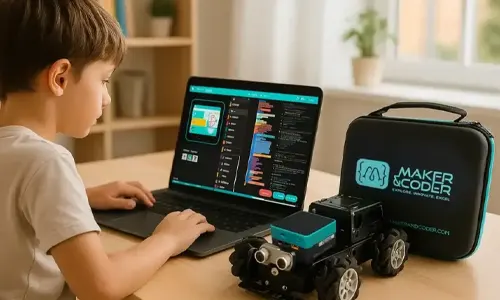
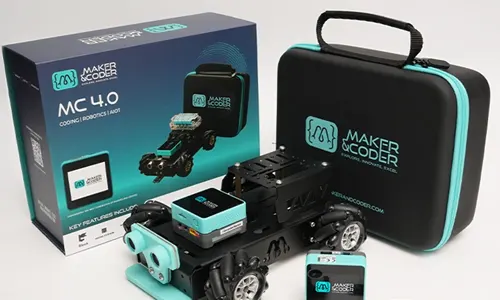
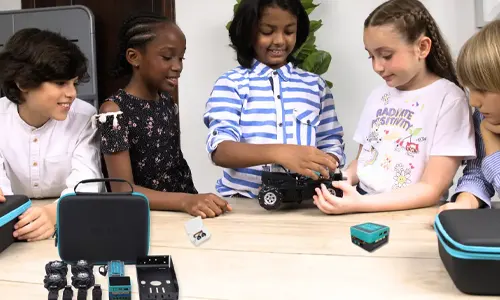
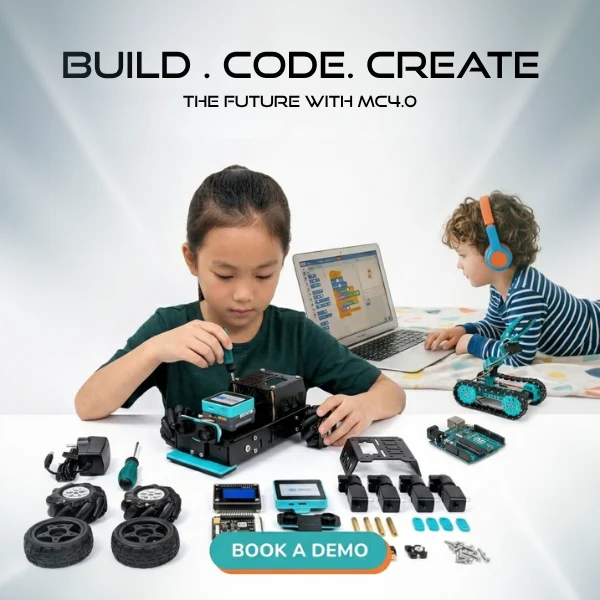
Maker & Coder’s MC 4.0 Kit can support classroom projects that connect hands-on STEM learning with clear student goals. For a grant proposal, describe the learning activities students will complete and how the equipment supports them, rather than presenting the kit as the outcome.
The MC Curriculum (K-12) is designed to integrate with the hardware for structured learning pathways. MC Blocks can support classroom activities involving building and coding, while Teacher Training Programs can help educators prepare to use the curriculum and tools in instruction. These offerings may be relevant when a project needs both learning resources and educator preparation.
Contact Maker & Coder to discuss how these educational tools could fit your classroom goals.
Bring Your Classroom Technology Vision to Life
A grant proposal starts a learning experience; it is not the finish line. As you move from writing a grant for classroom technology to planning its classroom use, keep student learning at the center. Consider what teachers need to integrate activities into lessons and how students will turn new tools into ideas, designs, and discoveries.
Maker & Coder’s MC 4.0 Kit, MC Curriculum (K-12), and MC Blocks can be part of a project focused on hands-on STEM learning. Connect any selected resources to the goals and activities in your proposal, so the classroom plan remains coherent from funding request to instruction. A thoughtful transition from proposal to practice gives educators a clear direction for making the project meaningful.
Ready to explore how these offerings could fit your classroom goals? Contact Maker & Coder about your project, and take the next step toward a learning experience students can build on.
Frequently Asked Questions
How do you write a grant proposal for classroom technology?
Build the proposal around a student learning need, and connect every requested resource to a planned classroom activity. When writing a grant for classroom technology, include the applicant’s mission, project objectives, implementation timeline, budget, and evaluation plan. Explain, for example, how students will use classroom tools to document a science investigation and what work samples or assessments will show their progress. Follow the funder’s requested summary length and format.
Which grants fund classroom technology for U.S. schools and teachers?
Options include federal programs, education foundations, corporate foundations, and subject-specific STEM opportunities. Examples include the NEA Foundation Student Achievement Grants, the Association of American Educators Foundation Classroom Grant, NSF’s ITEST program, and the Lemelson-MIT InvenTeam grant. Toshiba America Foundation and FirstEnergy also offer classroom grant opportunities. Since their purposes and eligibility differ, compare each program’s focus with your applicant type, grade range, location, and planned student activities.
What classroom technology grants are currently open, and what are their deadlines?
Open application status changes by cycle, while published program timelines offer planning cues. The Mazda Foundation accepts applications annually from May 1 through July 1; ITEST applications are due in mid-August each year. The FCC E-Rate filing window closes in March. Association of American Educators Foundation Classroom Grant deadlines fall in spring and fall each year. The Lemelson-MIT InvenTeam review takes place annually in spring, which is a review period, not an application deadline.
What evidence and data should support a classroom technology grant proposal?
Use evidence that demonstrates the learning need and gives reviewers a way to assess the project. Include relevant student work, classroom assessment results, teacher observations, or documented access gaps. State a baseline, intended outcome, and method for measuring progress. For example, a project addressing weak science explanations could compare student lab reports from before and after a technology-supported investigation. Explain how the evidence informed the project rather than adding data without context.
How should a grant proposal explain technology’s impact on student learning?
Describe what students will learn or produce through an activity the technology enables. Device access or screen use alone does not prove impact. Explain, for instance, how students will gather measurements, analyze patterns, and present evidence during a design challenge. Identify the learning objective, the student work that will demonstrate it, and the assessment teachers will use. This creates a clear link between technology use and educational value.
How do schools handle maintenance, training, accessibility, and data privacy for grant-funded technology?
Include an implementation plan assigning responsibility for upkeep, educator preparation, student access, and safe data practices. Explain how teachers will learn to use the tools in lessons and how students with different learning needs will participate. Before adopting software or applications, involve the school’s IT department in reviewing privacy and safety terms. Describe how the school will manage student information and address routine equipment or access issues.